
This article is the second in a series exploring the obstacles and accesses to deep and meaningful connection in our human relationships. If you’ve not yet read the first, I recommend you do so here.
“It is the obvious which is so difficult to see most of the time. People say ‘It’s as plain as the nose on your face.’ But how much of the nose on your face can you see, unless someone holds a mirror up to you?”
Isaac Asimov – I, Robot
Introduction
Try something on for a moment, won’t you? Imagine that almost no one (aside from maybe the rare psychopath or sociopath) is the villain in their own story. No one imagines their intentions are anything but good, and yes, I am even talking about that person who just crossed your mind. Based on my research and experience I believe this to be true. Yet nearly all of us end up at some point in our lives becoming the villain in someone else’s story. How does this happen?
A Problem of Perspective
“…What happens is of little significance compared with the stories we tell ourselves about what happens. Events matter little, only stories of events affect us.”
Rabih Alameddine – The Hakawati
For everything there is to see, there are an infinite number of perspectives from which to see and understand. While we may have an innate sense of this reality, we dramatically overestimate the amount of overlap between the perspective we have taken and the perspectives taken by others in any given situation. Even when we are using the exact same words to describe our perspectives, the contexts behind our meaning are still radically different. This faulty assumption of shared perspective is right at the heart of conflict.
Enter the “I See/You See” Framework

For everything and everyone there is to see, there is what I see and what you see. Depending on our shared experience, level of shared intimacy, and current circumstance these perspectives may overlap a little bit or not at all. What they can never do is be exactly the same. It’s just not logically possible. The difference lays in “the stories we tell ourselves about what happens.” or the meaning we assign to what happens or what we are seeing. We draw on our singular experience and context to create these stories, and no two stories can be exactly the same.
This being true, when you and I interact there are at least two separate versions of me present:
- The me I see
- The me you see
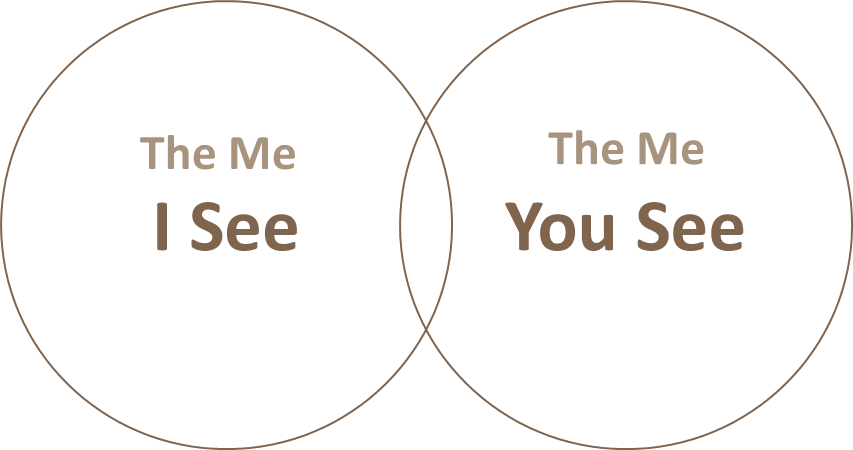
If we have known each other a very long time, been through some seriously intense experiences together, and shared deep emotional intimacy on a variety of topics then there might be nearly as much overlap in the Venn diagram of the two versions of “me” as illustrated above. More likely, there is much less overlap and in the case of you and me patient reader I would bet the circles probably don’t even touch. So, I am in the interaction as the me I see myself to be and you are interacting with the me you see me to be. Might we run into a bit of misunderstanding?
And wait, there’s more! In our interaction there are at least two more characters present:
- The you I see
- The you you see
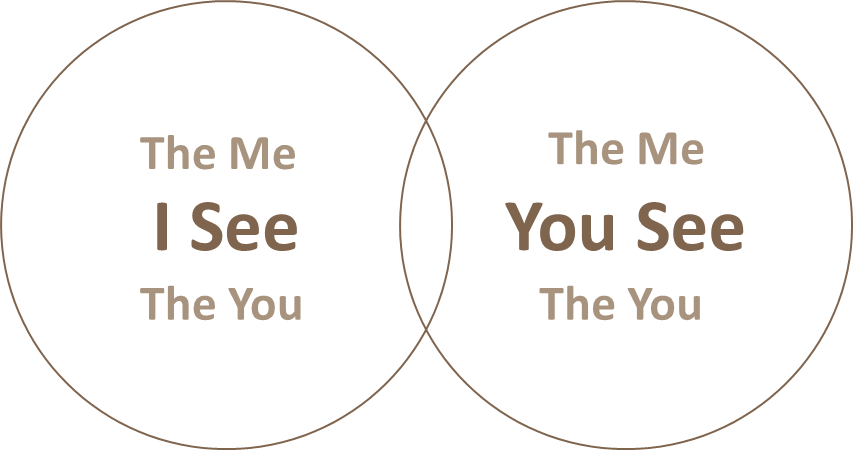
So, in truth, I am in the interaction as the me I see myself to be interacting with the you I see you to be. Meanwhile, you are in the interaction as the you you see you to be interacting with the me you see me to be…

At this point, I couldn’t call you wrong if you were to point out that we aren’t even really in the same conversation are we? Are we starting to see why we might have so much conflict, misunderstanding, unmet needs, lack of connection, and misalignment? If your mind is spinning a little that means you’ve been paying attention. Hang in there, I promise it will all come together!
Ok, so what do we do about it?
“What people in the world think of you is really none of your business.”
Martha Graham
Let’s start with what we don’t do, shall we? We don’t invest a drop of energy attempting to manipulate, shift, train, or control the “me” other people see. It doesn’t work, it’s counterproductive, and even worse it is an instant “Go directly to Jail” card with jail being the world of “someday when” (“Someday when they see me as _______ then I can ________ and I will finally be _________). Take the case that what other people think of you is none of your business and has nothing to do with you. This is not about the “you that you are”. We did that work in the previous article, and who you choose to be has nothing to do with other people. This step is now about “the you that they are”, or who you see the person with whom you are interacting to be.
Step back to our original assertion: “No one is the villain in their own story.” Bring to mind a person with whom you have or have had conflict, a villain if you will. If you cannot conjure such a person, bring to mind someone with who you sense a lack of connection or wish you had a closer connection. Sit for a moment, and immerse yourself in the memory of an interaction you’ve had with that person. What were you hearing? Feeling? Saying? Seeing? Doing? Thinking? Really allow yourself to be there.
- In that interaction, what were your intentions? Who were you being? What important values were you acting from in that moment?
- Who did you see the other person as being? Be rigorous, list out all the words that come to mind.
- What did you decide were their intentions?
- Assuming no one is the villain in their own story, who might they have seen themselves as being in that interaction? Be generous.
- What might they have believed their intentions were? Be even more generous.
- What important values might they have been acting from in that moment? Be as generous as you can muster.
If you were thoroughly honest you likely noticed some significant daylight between the “them you saw” and the “them they saw” in that scenario, and this was just with you making it up! Imagine how much different it might be from their actual perspective.
The past has happened and is not happening, and there is no changing it. We do however have full control over how we choose to interact in the present. If you want to improve your experience of connection, pick someone and take this series of questions on in practice in your interactions:
- Who, from their perspective, is this person choosing to be right now? What are their intentions regardless of any impact I may be feeling? Assume benevolent intent.
- What important values are they expressing or not expressing in our interaction right now?
- What assumptions am I making about this person’s intent and chosen being that if I were seeking first to understand I might be able to disprove or confirm?
- What decisions have I made about who this person is that hamper our connection and that I could let go with no risk of physical harm to myself or others?
- What is being left unsaid between us that if spoken (particularly in the form of a genuinely curious question) might help us take the next step together or apart?
Certainly, these questions are not exhaustive and they may be a good start toward bringing your authentic chosen self and their authentic chosen self into closer connection. I’d love to hear any additional thoughts or questions which come to mind for you in the comment section below.
Wait, I want to be seen too!
Me too. We all want our truest fullest selves to be seen, and we have no control over how others see us. To others, we can only ever be who they are that we are just as they are who we are that they are. We can, however, exert some possibility of influence through how we show up in our interactions and the space we create for the people with whom we are so fortunate to interact. I have found that I enhance and increase my experience of being more fully seen and understood when I:
- Extend trust first
- Vulnerably bring my authentic chosen self to the interaction
- Seek to understand with loving curiosity the chosen selves of others
- Share the important values from which I am acting and encourage others to do the same
- Actively find common ground and release judgment
- Openly share and live out my boundaries (how I will behave)
- Openly co-create agreements (how we will behave together)
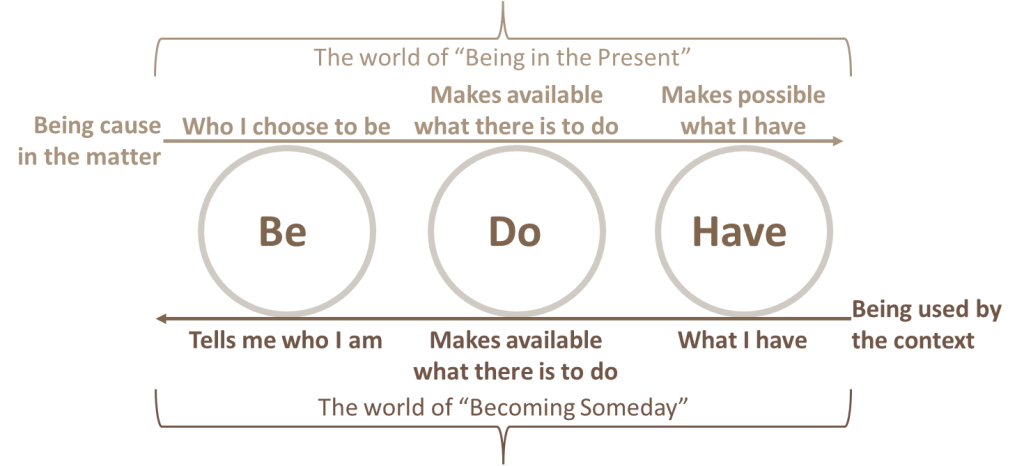
As we take ownership of who we choose to be in the present moment, take responsibility for the stories we tell of who others are, and get fully committed to deep connection we gain additional power in the world of “being cause in the matter” and create the space for others to join us there.
I would so love your feedback. Both words of praise and constructive feedback feed my creator soul!
If you would be so generous, fill out the short form below and let me know what you think of this content, how it was valuable, how you’d like me to improve, and also add in any thoughts or other questions you would find interesting for me to explore! Thanks for reading, and don’t forget to hit that “subscribe” button!
Thank you for your response. ✨

 Coach John Doll
Leave a comment